
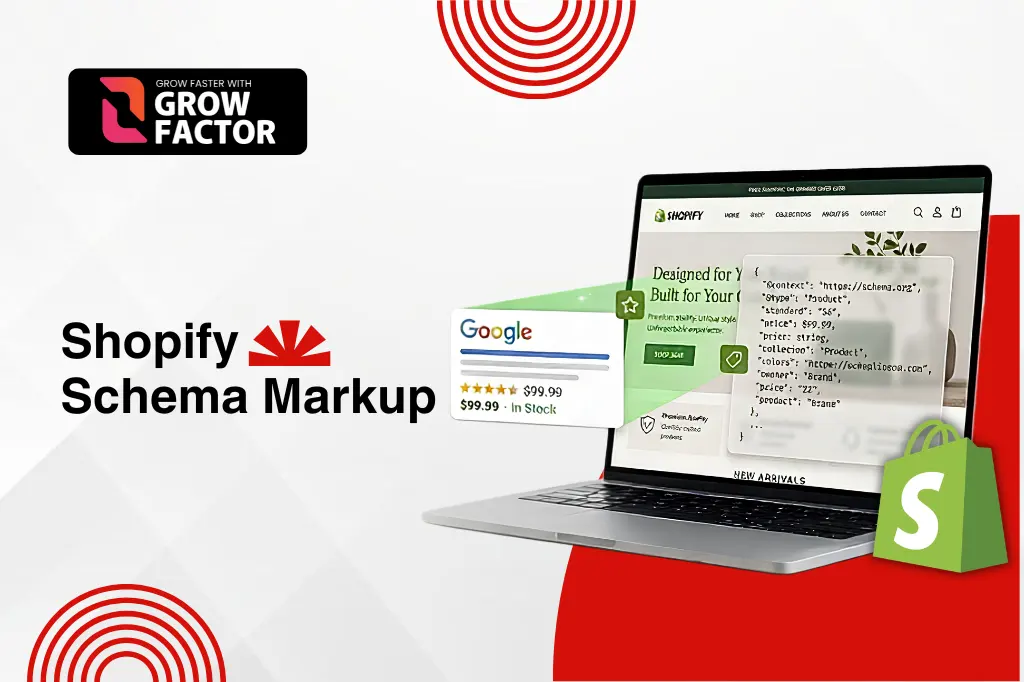
Two stores can rank in the exact same position on Google, and one still gets more clicks because its listing shows a star rating, a price, and stock availability, and the other shows plain blue text. That gap is Shopify schema markup at work.
This guide covers what it actually is, which schema types matter most for an ecommerce store, five ways to add JSON-LD to your theme, and how to test it properly written for store owners and SEO specialists who want their listings to stand out, not just rank.
Want to know what's missing from your store's schema?
Identify missing schema types that may be limiting your Shopify store’s search performance and rich results.
What is Shopify Schema Markup?
Schema It’s structured code almost always written in JSON-LD format added to a store’s pages so search engines can understand exactly what a page contains: a product, its price, its brand, a review, an article, or a business location. It’s the difference between Google guessing at a page’s content and Google reading it directly.Markup
Correctly implemented Shopify schema markup is what makes rich results possible: star ratings, price ranges, breadcrumb trails, and FAQ dropdowns showing up directly in search results, before a visitor even clicks.
Understanding How Schema Markup Works (JSON-LD Explained)
JSON-LD (JavaScript Object Notation for Linked Data) is the format Google recommends for Shopify schema markup. It sits inside a script tag typically application/ld+json separate from the visible page content, describing that content in a structured, machine-readable way.
Every piece of Shopify schema data follows a vocabulary defined by schema.org: a @type tells search engines what kind of thing is being described (Product, Organization, BreadcrumbList), and the properties underneath fill in the specifics name, price, availability, rating.
Google’s own structured data documentation is the authoritative reference for which properties are required versus recommended for each schema type, worth bookmarking before implementing anything custom.
Essential Shopify Schema Types Every Store Should Implement
Not every schema type carries equal weight for an ecommerce store. These are the ones that consistently drive rich results:
| Schema type | What it enables |
|---|---|
| Product | Price, availability, and rating shown directly in search results |
| Organization | Brand identity, logo, and social profiles recognized by Google |
| BreadcrumbList | Breadcrumb trail shown in place of a raw URL |
| Review / AggregateRating | Star ratings displayed next to a product listing |
| FAQPage | Expandable question-and-answer dropdowns in search results |
| Article / BlogPosting | Byline, publish date, and featured image eligibility for blog content |
Shopify schema generator tools and apps typically cover Product and Organization by default, the remaining types usually need to be added deliberately.
Does Shopify Automatically Generate Schema Markup?
Partially. Shopify’s Online Store 2.0 themes, including Dawn, output basic Product schema and some Organization data out of the box. This covers the minimum, not the full picture.
- What Shopify includes by default: basic product name, price, and availability
- What it typically leaves out: review/rating schema, FAQPage, HowTo, and often BreadcrumbList on older themes
- What this means: most stores are relying on partial Shopify schema markup without realizing it
5 Ways to Add JSON-LD Schema Markup to Your Shopify Store
How to add JSON-LD to Shopify depends on how much control you need and how comfortable you are editing theme code.
Method 1: Install a No-Code Schema App (Recommended)
A dedicated schema app is the fastest path for most merchants, it typically auto-generates Product, Organization, and Breadcrumb JSON-LD without touching theme files, and updates automatically as schema.org standards evolve.
Method 2: Use Your Theme's Built-In Schema
Some Online Store 2.0 themes ship with partial schema already built into the theme.liquid schema output. Check the page source for existing application/ld+json blocks before adding a second layer that could conflict.
Method 3: Manually Edit the theme.liquid File
Editing Shopify Liquid JSON-LD directly gives full control over every property but carries real risk, a malformed script tag can break page rendering. Always duplicate the theme first and test in a staging environment.
Method 4: Add Page-Specific Schema with Shopify Metafields
Shopify schema metafields let you attach structured properties, GTIN, brand, custom attributes at the product level, then pull them into your JSON-LD template dynamically instead of hardcoding values per page.
Method 5: Work with a Shopify Developer for Advanced Implementations
Multi-location stores, custom storefronts, or stores needing dynamic FAQPage or HowTo schema generally need a developer to wire structured data to Liquid objects correctly rather than relying on static templates.
How to Test and Validate Shopify JSON-LD Schema
Use Google’s Rich Results Test to check whether a page’s Shopify schema markup is eligible for rich results, and Google Search Console’s Enhancements report to monitor validation errors across the whole site over time not just one page at a time.
- Test every page template separately product, collection, homepage, and blog schema often live in different theme sections
- Re-test after every theme update, since an update can silently overwrite custom JSON-LD
- Watch for warnings, not just errors missing recommended properties won’t break validation but can limit which rich results are eligible
Structured Data vs. Schema Markup: What's the Difference?
| Term | What it means |
|---|---|
| Structured data | The broad concept of organizing page content in a machine-readable format |
| Schema markup | The specific vocabulary (from schema.org) used to write that structured data |
| JSON-LD | The code format Google recommends for writing schema markup |
In practice, the three terms get used interchangeably but schema markup is the vocabulary, and JSON-LD is how that vocabulary gets written into a Shopify page.
Rich Results vs. Rich Snippets Explained
Rich snippets were Google’s original term for enhanced listings; rich results is the current, broader term covering everything from star ratings to interactive carousels. Functionally, both describe the same outcome: a search listing that shows more than a title and description because of schema markup behind it.
Most merchants encounter both terms interchangeably in app descriptions and SEO tools, and the distinction rarely changes what to actually implement clean, accurate structured data is what both terms depend on either way.
Why Shopify Schema Markup Is Important for SEO
Schema markup doesn’t directly boost rankings the way backlinks or content depth do but it directly affects click-through rate, which influences how Google evaluates a listing’s relevance over time.
How Schema Supports AI Search Experiences
AI Overviews and conversational search platforms pull from structured, well-labeled content far more reliably than from unstructured page text. Clean Shopify schema markup makes a store’s products and answers easier for these systems to extract accurately.
Unlocking Rich Results for Ecommerce Stores
Price, availability, and star ratings shown directly in search results give a listing a visual and informational edge over competitors showing plain text, particularly on mobile, where screen space is limited and every extra detail competes for attention.
Must-Have Schema Types for Shopify Stores
Implementing Product Schema with JSON-LD
Shopify product schema needs, at minimum, name, image, description, and offers (price and currency) to qualify for basic rich results, brand and GTIN strengthen eligibility further.
Adding Price and Availability Schema
Price and availability schema must stay in sync with actual inventory, A listing showing “in stock” for a sold-out product is a common cause of Search Console warnings and lost trust when a customer clicks through.
Organization and Brand Schema Markup
Shopify organization schema ties a store’s name, logo, and social profiles together for Google, and is a prerequisite for certain knowledge panel features. It only needs to be implemented once, sitewide, rather than per page.
Local Business Schema for Shopify Stores
Stores with a physical location a Karachi showroom alongside an online store, for example, benefit from LocalBusiness schema in addition to Organization schema, since it supports map-pack visibility that Organization schema alone doesn’t cover.
Breadcrumb Schema Implementation
Shopify breadcrumb JSON-LD replaces a raw URL in search results with a readable path Home > Collection > Product, which improves both click-through and perceived site structure. The Shopify breadcrumb SEO guide covers implementation in more depth, including common Shopify duplicate schema issues that show up when a theme and an app both output BreadcrumbList.
Applying Schema Across Different Shopify Page Types
Product Page Schema Best Practices
Product pages carry the highest-value schema on a Shopify store, since Product and Review schema directly influence how a listing appears in shopping-related search results. The Shopify product page SEO guide covers the broader on-page factors that work alongside schema to support rankings
Homepage Schema Optimization
Homepage schema should focus on Organization and WebSite properties, Including a SearchAction property where the store has on-site search rather than duplicating Product schema that belongs on individual listings.
Collection Page Schema Implementation
Collection pages benefit from ItemList schema, which signals to Google that the page represents an ordered set of products rather than a single item. The Shopify collection SEO guide covers how collection structure and schema work together for category-level rankings.
Blog and Article Schema Markup
BlogPosting schema on Shopify’s blog template should include author, publish date, and a featured image at minimum, All three are commonly missing on default theme output and have to be added manually or through an app.
Top Shopify Schema Apps and Generators for 2026
Rather than naming one tool, it’s more useful to know which category solves which problem:
- General-purpose schema generator apps: auto-generate Product, Organization, and Breadcrumb JSON-LD across the whole store
- Review and rating apps: add AggregateRating schema tied to actual collected reviews rather than static placeholder data
- SEO suite apps with a schema module: bundle schema generation alongside meta tag and sitemap management
Whichever category you choose, validate its output with Google’s Rich Results Test before assuming it’s working correctly not every schema app ships clean, error-free code.
Why Your Shopify Schema May Not Be Appearing
- Rich results are never guaranteed Google decides whether to display them even with valid schema
- Missing recommended (not just required) properties can limit eligibility
- Two schema sources, theme and app outputting the same type creates Shopify duplicate schema markup that Google may ignore entirely
- Schema added through JavaScript injection after page load is sometimes missed during Google’s rendering pass
Common Shopify Schema Markup Errors to Avoid
- Leaving price or availability schema out of sync with actual inventory
- Duplicating Organization or Product schema across theme and app
- Using placeholder or fake review data in AggregateRating schema
- Forgetting to re-validate after a theme update overwrites custom JSON-LD
- Adding FAQPage schema for content that isn’t visibly present on the page
Shopify Schema Markup Best Practices for Better Results
- Implement Organization schema sitewide once, rather than duplicating it per page
- Keep every schema property accurate and current schema describing content the page doesn’t actually show violates Google’s guidelines
- Test every template type individually, not just the homepage
- Document which method (app, theme, or manual) generates which schema type, so future edits don’t create duplicates
Limitations and Challenges of Shopify Schema Markup
Multi-app stacks are the most common source of ongoing maintenance: every added app is a potential new source of duplicate or conflicting structured data, which means schema work is never fully “done” on an actively maintained store.
It improves eligibility for rich results, it doesn’t guarantee them. Google ultimately decides which listings get enhanced treatment, and that decision can change without notice.
How Much Does Shopify Schema Markup Cost in Pakistan?
Cost depends on scope, A sitewide schema audit and cleanup is a different project than implementing FAQPage schema on a handful of key pages. The SEO pricing in Pakistan page outlines how this kind of technical SEO work is typically scoped for local and international Shopify merchants.
What ROI can Shopify Schema Markup deliver?
Schema markup alone won’t produce numbers like that but a listing with visible star ratings and pricing consistently earns more clicks than one without, at the exact same ranking position.
Real numbers make the case better than estimates. Growfactor’s fragrance retailer case study included structured data and technical SEO fixes as part of the foundation behind growing monthly visitors from 1,100 to 18,400, with organic orders passing 420 per month, in 8 months.
Should you Implement Schema yourself or hire a Shopify SEO agency?
- DIY works if: you’re comfortable validating JSON-LD in Google’s Rich Results Test and auditing for duplicate schema across apps and theme
- An agency works if: you’d rather Growfactor’s technical team implement and maintain it as part of a broader SEO engagement
Our Shopify SEO services include structured data implementation as part of a wider technical foundation, with SEO services in Pakistan covering the complete scope for local and international Shopify stores.osition.
Ready to see what schema your store is missing?
Connect with our Shopify SEO specialists to discuss your goals and receive a tailored growth plan for your store.
Frequently Asked Questions
How long does it take for schema markup to appear in Google search results?
Typically a few days to a few weeks after Google recrawls and revalidates the page, valid schema doesn’t guarantee an immediate rich result, and Google controls the display timeline.
Can I add multiple schema types to one Shopify page?
Yes, a single product page commonly carries Product, BreadcrumbList, and Review schema together in the same or separate JSON-LD blocks, as long as none of them duplicate the same type twice.
Do I need a developer to add schema markup to Shopify?
Not necessarily. A schema app or a theme’s built-in output covers most standard cases; a developer becomes worthwhile for custom properties, metafield-driven schema, or advanced multi-location setups.
Does schema markup guarantee rich results?
No. Schema markup makes a page eligible for rich results, but Google independently decides whether and when to display them valid, error-free schema is necessary but not sufficient on its own.
Conclusion: Build a Stronger Shopify Store with Schema Markup
It isn’t a one-time setup new apps, theme updates, and product changes can all quietly break or duplicate structured data, which means periodic validation matters as much as the initial implementation. Growfactor has implemented and audited Shopify schema markup and technical SEO for 100+ businesses across ecommerce, professional services, and SaaS, over 6+ years of white-hat SEO work in Pakistan and internationally.
Find Missing Schema Markup
Stop guessing what's missing. Our audit identifies structured data errors and optimization opportunities across your Shopify store.


