
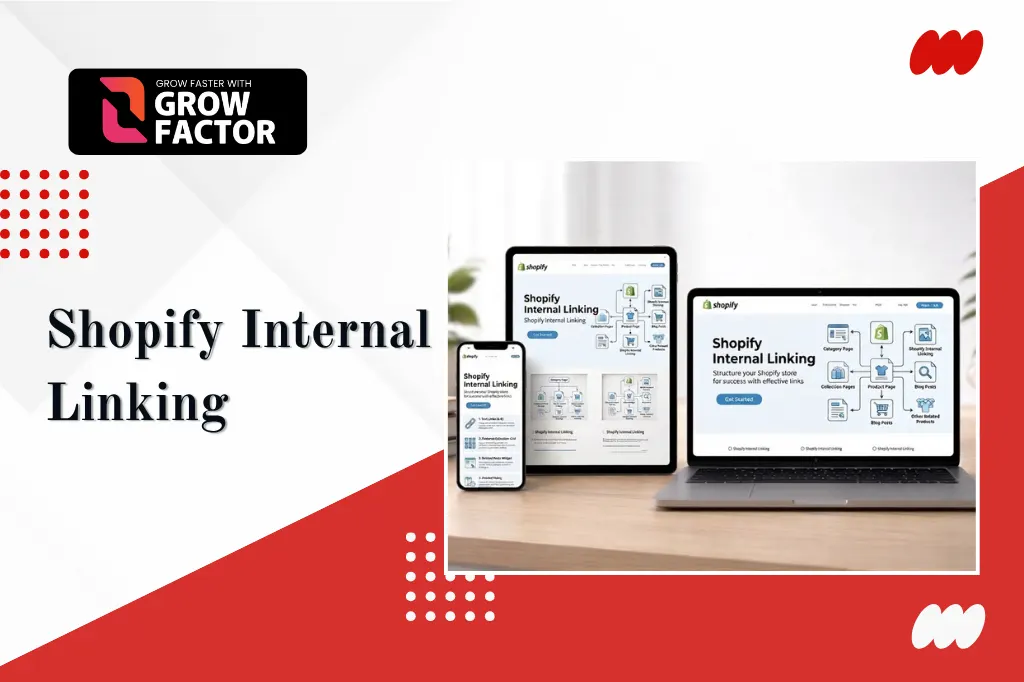
Your best blog post has zero links pointing to your best-selling product. That’s a missed opportunity Shopify internal linking exists specifically to close and it’s one of the few SEO levers merchants can pull without touching a single line of theme code.
This guide covers what Shopify internal linking actually does, how to build a real strategy around it, and where most stores quietly get it wrong. It’s written for merchants and SEO professionals who already have decent content and products, but haven’t connected them deliberately.
What is Shopify internal linking? Shopify internal linking is the practice of linking pages within your own store to each other product to collection, blog post to product, page to page so both buyers and search engines can navigate your site logically. Done well, it’s one of the highest-leverage, lowest-cost pieces of any Shopify link building guide.
If you’re a Shopify merchant or SEO professional working on site architecture, this guide is built the way Growfactor structures Shopify internal linking for real client stores.
Want yours audited?
Identify missed internal linking opportunities and improve your Shopify store's navigation and SEO performance.
Types of internal links on Shopify
- Navigation and menu links
- Product-to-collection links
- Related product and cross-sell links
- Blog-to-product links
- Breadcrumb links
Each type serves a slightly different purpose, but they all contribute to the same underlying goal: making sure no page on your store sits isolated from the rest.
Importance of internal linking in e-commerce
Importance of internal links for Shopify stores comes down to one thing: without them, even your best content and products can sit isolated, invisible to both crawlers and buyers browsing past the page they landed on. A store with strong products but weak internal linking often underperforms a store with a smaller catalogue but a genuinely connected site structure.
How internal linking supports Shopify SEO
Improving overall site structure
Shopify internal linking for SEO starts with structure a logical hierarchy tells Google which pages matter most and how they relate to each other. Without this, Google has to infer relationships between pages on its own, which it does far less reliably than following explicit internal links.
Helping search engines crawl and index pages
Pages with no internal links pointing to them are far less likely to be discovered, crawled, or indexed promptly, regardless of how good the content is. This is especially relevant for new blog posts and product launches, which depend on internal links for fast discovery before external links have a chance to accumulate.
Distributing page authority and link equity
Shopify link juice distribution flows through internal links the same way it flows through backlinks a page with many internal links pointing to it typically carries more authority than an orphaned one. This is one of the most underused levers in Shopify internal linking, since it costs nothing beyond a deliberate linking decision.
Enhancing user experience and conversions
Good internal linking guides buyers naturally from discovery to purchase, rather than leaving them to find their own way back to a relevant product. This overlaps significantly with conversion rate optimization, even though it’s frequently discussed purely as an SEO tactic.
Building a Shopify internal linking strategy
Creating a Shopify linking strategy from scratch is easier when broken into concrete steps rather than treated as one abstract goal.
1. Use descriptive anchor text
Link text should describe the destination clearly “our technical SEO services” performs far better for both users and search engines than “click here.” Descriptive anchors also give Google an additional relevance signal about the linked page’s topic.
2. Link from high-traffic pages
Your homepage and top-performing blog posts carry the most authority to pass along prioritize linking from these to pages that need a visibility boost. Check your analytics for genuinely high-traffic pages rather than assuming which ones perform best.
3. Maintain a logical hierarchy with a silo structure
Group related content into clear silos (by category, by product line) so links stay topically relevant rather than scattered randomly across unrelated pages. A silo structure also makes it far easier to spot gaps where a category has weak internal linking coverage.
4. Group content seasonally and thematically
Seasonal collections and thematic blog content benefit from links to each other during the relevant period, then can be deprioritized once the season passes. This keeps navigation relevant without requiring a permanent site restructure every few months.
5. Monitor and manage your links with regular audits
A Shopify SEO internal link audit on a regular schedule catches broken links, orphaned pages, and outdated anchor text before they quietly hurt rankings. Treat this the same way you’d treat any other recurring technical SEO maintenance task.
Shopify menu and navigation as an internal linking tool
Shopify menu internal linking is often the single highest-authority linking opportunity on a store, since main navigation appears on every page. Keep it focused on genuinely important categories rather than listing every collection your store has, since an overloaded menu dilutes the authority passed to any single item.
Breadcrumb navigation and SEO
Shopify breadcrumb navigation SEO benefits come from giving both users and crawlers a clear, consistent path back through the site hierarchy and breadcrumbs frequently display directly in search snippets too, giving an added click-through benefit beyond pure navigation.
User experience and conversion: beyond SEO
Creating a guided shopping experience
Thoughtful internal linking leads buyers through a natural path from a blog guide, to a relevant collection, to the specific product that solves their problem.
Enhancing engagement with visual storytelling
Linking through lifestyle imagery and visual content keeps buyers engaged longer and gives them more natural entry points into your catalogue.
Reducing bounce rates with Shopify links
Reducing bounce rate with Shopify links works by giving visitors an obvious next step, rather than leaving them to hit the back button after one page view.
Your "You may also like" section is doing double duty
This one widget quietly serves two purposes at once: it improves cross-sell conversion for buyers, and it’s a meaningful internal linking mechanism spreading link equity to related products automatically as your catalogue grows.
Linking related products and blog content
Shopify related products internal links deserve deliberate curation rather than a purely algorithmic default — manually reviewing and adjusting related product suggestions on high-value pages often outperforms leaving it fully automated.
Why nofollow on internal links wastes your authority
Nofollow tells search engines not to pass authority through a link appropriate for external, untrusted links, but a mistake on your own internal pages. Applying nofollow internally (sometimes done accidentally by an app or theme setting) blocks the exact link equity flow Shopify internal linking is meant to create.
The most expensive mistake on this list is usually the second one, merchants submit the sitemap once, assume it’s working, and never check back to confirm Google is actually fetching it successfully over time.
Automated solutions for Shopify internal linking
Choosing the right internal linking app for your store
Best Shopify apps for internal linking vary in approach some automate related-product suggestions, others build internal link suggestions from your blog content. Evaluate based on whether you need bulk automation or more surgical, manual control, and check reviews for how the app handles large catalogues specifically.
Leveraging technology for ongoing efficiency
Automated internal linking for Shopify saves significant time on large catalogues, but should be reviewed periodically rather than trusted blindly — automation catches volume, not always relevance. The best setups combine automated baseline linking with manual review on your highest-value pages.
How to find And fix broken internal links
- Use a Shopify internal link checker to crawl your full site for dead links
- How to find broken links in Shopify manually: check recently redirected or deleted pages first, since these are the most common source
- Tools for mapping Shopify internal links can also visualize orphaned pages with no internal links pointing to them at all
Seven internal linking mistakes we see on every Shopify store
These patterns show up repeatedly across audits, regardless of store size or industry:
- Using “click here” or “read more” instead of descriptive anchor text
- Leaving blog posts with zero links to related products
- Applying nofollow to internal links by accident
- Never auditing for broken links after a bulk URL change
- Over-linking a single page with dozens of internal links diluting relevance
- Ignoring orphaned pages with no internal links pointing to them
- Treating internal linking as a one-time setup instead of ongoing maintenance
Fixing even the first two on this list alone often produces a noticeable improvement in how evenly authority flows across a store’s pages.
What ROI an better internal linking deliver?
Real numbers beat estimates. Growfactor’s fragrance retailer case study included internal linking restructuring as part of the technical foundation behind growing monthly visitors from 1,100 to 18,400 and organic orders past 420 per month in 8 months. Shopify internal linking rarely shows up as a standalone metric its value compounds alongside content and technical SEO work happening at the same time.
Should you handle this yourself or hire a Shopify SEO agency?
- DIY works if: your team has time to audit and adjust internal links across the catalogue regularly
- An agency works if: you’d rather Growfactor’s SEO consulting services handle the strategy and ongoing audits for you
- Growfactor’s on-site SEO work includes internal linking structure as part of a full on-page review, alongside broader technical SEO services for stores needing a deeper audit
Let's Build Your SEO Strategy
Schedule a free consultation and discover the best opportunities to grow your Shopify store with data-driven SEO.
Frequently Asked Questions
What is the main function of internal linking in content management?
Internal linking connects related content within a site, helping both users navigate logically and search engines understand page relationships and relative importance.
What is the difference between internal links and backlinks?
Internal links connect pages within your own domain; backlinks come from external sites and typically carry more authority-building weight, though both matter for SEO.
Do internal links help as much as backlinks?
Not quite as much individually, but they’re far easier to control directly and cost nothing to implement, making them a highly efficient use of SEO effort.
Should I use a Shopify app for internal linking?
It depends on catalogue size smaller stores can manage manually, while larger catalogues benefit from automation combined with periodic manual review.
How often should I audit my internal links?
Quarterly at minimum, and immediately after any bulk URL or redirect change that could break existing links.
Conclusion
Shopify internal linking isn’t a one-time setup it’s an ongoing structure that needs to grow and adjust alongside your catalogue and content. The stores that treat it as a deliberate strategy, not an afterthought, consistently get more value out of every product page and blog post they publish.
Growfactor has built and audited Shopify internal linking structures for 100+ businesses across e-commerce, professional services, and SaaS, over 6+ years of white-hat SEO work in Pakistan and internationally, including dedicated Shopify SEO services and Pakistan-focused SEO packages.
Build a Stronger Internal Link Structure
Discover internal linking issues that may be limiting your store's visibility and get expert recommendations to improve search performance.


